

Sallyport announces investment in Submar
Sallyport announces investment in Submar, a Louisiana-based pipeline erosion remediation business.

Sallyport announces investment in Submar, a Louisiana-based pipeline erosion remediation business.

The awards are designed to recognise advanced drone operations that solve complex field challenges in industrial, scientific, and engineering environments.
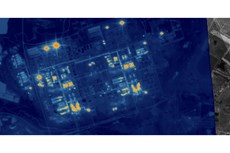
SatVu declares HotSat-2 Start of Commercial Operations: High fidelity thermal intelligence reveals hidden activity across critical infrastructure worldwide.
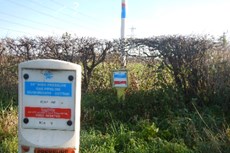
New report says half of all infringements happened even though the person responsible knew about the pipelines beforehand.
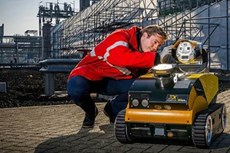
Certification removes a key barrier to deploying autonomous inspections across oil and gas, LNG and chemical facilities operating in potentially explosive zones.
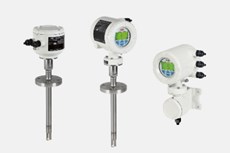
ABB’s SensyMaster flowmeter now delivers verified thermal mass flow measurement for the chemicals, oil and gas, power and utilities, and industrial gas industries.
The new solutions deliver simpler and safer temperature measurement for applications in oil & gas, chemicals, marine, and power.
Half of workers report rising risk of major industrial disaster; ‘near misses’ on the rise.
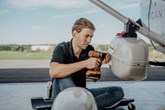
Blind controlled testing yielded a sensitivity of 5.9 kg/hour with a 90% probability of detection.
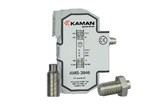
The non-contact displacement sensors provide high reliability and performance in high-pressure environments, including oil, gas, and subsea condition monitoring, ranging from 500 psi to 40 000 psi.
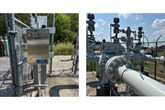
Having proven its capabilities in monitoring and detection leaks in oil and gas pipelines, PipeSense, a leading midstream technology provider, is now expanding its support to emerging CO2 applications and networks.
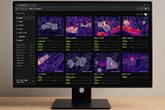
After two profitable bootstrapped years, the Zurich-based industrial AI company will accelerate deployment of its end-to-end thermal monitoring platform across sawmills, recycling, mining, chemical processing, oil and gas, and maritime operations - categories where fire and downtime risk are increasingly outpacing what insurers are willing to cover.

Aquanta Vision, an emerging leader in methane detection, has secured pre-seed funding to accelerate commercial development of its optical gas imaging (OGI) detection software which improves methane leak identification during inspections.
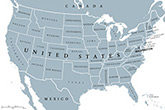
President Trump’s Transportation Department announces 11 grant funding opportunities to improve pipeline and Hazmat Transportation Safety.
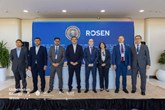
Cooperation supports the exchange of international expertise in industrial safety, risk-based inspection, and long-term energy security.